


If you have owned your Kansas City starter home for several years, you may have more buying power than you realize.
That buying power is called home equity. It is the difference between what your home is worth and what you still owe on your mortgage. For many move-up buyers, equity is the key to purchasing the next home without waiting for mortgage rates to return to the unusually low levels of the past.
You might be wondering, “Can I really move up when mortgage rates are in the mid-6s?”
In many cases, yes. The right strategy may allow your current home to help fund your next one through a larger down payment, mortgage points, closing costs, or a carefully planned transition between selling and buying.
Kansas City equity is working in your favor
The Kansas City housing market remains competitive, even though buyers have more time to make decisions than they did during the busiest pandemic years.
Recent Kansas City Regional Association of REALTORS® market data shows:
- The median sales price for all homes was approximately $349,900 in July 2026.
- Median prices were up about 4% year over year.
- Year-to-date median prices were up approximately 4.7%.
- The market had roughly 2.6 months of supply, which is still considered relatively tight.
- Existing homes had about 2.3 months of supply.
That does not mean every Kansas City home has gained the same amount. A well-maintained home in a popular area may perform differently from a property that needs major updates. Location, condition, school boundaries, lot size, and buyer demand all matter.
Still, steady price growth combined with years of mortgage payments may have created meaningful equity in your starter home.
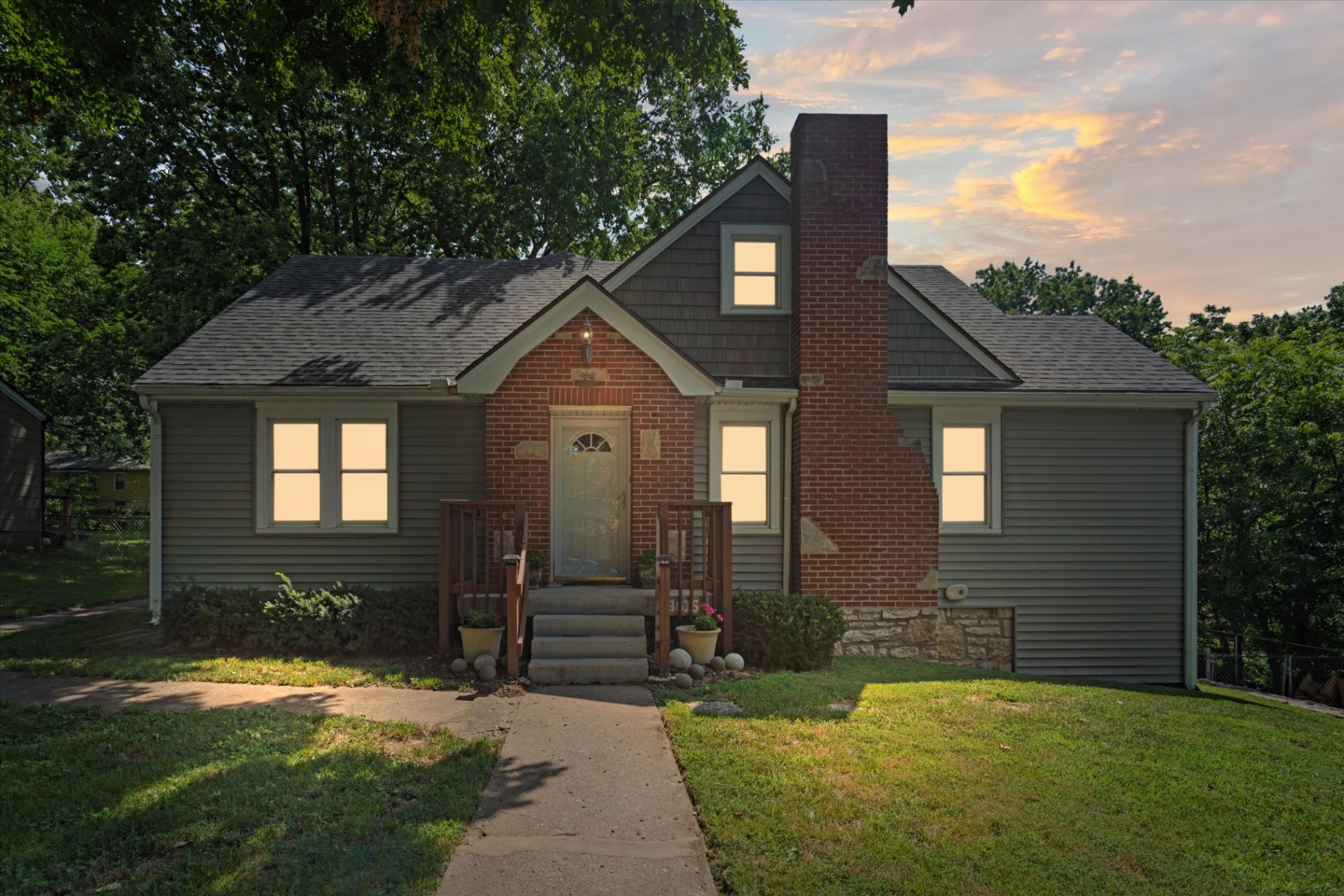
First, understand how much equity you have
The basic calculation is simple:
Estimated current value − mortgage payoff = gross home equity
For example:
- Estimated current value: $325,000
- Remaining mortgage balance: $215,000
- Gross equity: $110,000
That $110,000 is not automatically the amount you will have available for your next purchase. You still need to account for the costs of selling, including commissions, title charges, repairs, moving expenses, and any seller concessions.
A more useful calculation is:
Estimated sale price − selling costs − mortgage payoff = estimated net proceeds
Using the example above, if your home sells for $325,000 and your mortgage payoff is $215,000, the starting difference is $110,000. After selling expenses and other costs, your actual proceeds may be lower.
That is why you should focus on net proceeds, not just the online estimate of your home’s value.
Your equity worksheet
Use this quick worksheet to start the conversation:
- Estimated home value: $__________
- Mortgage payoff amount: $__________
- Other liens or loans: $__________
- Estimated selling costs: $__________
- Expected net proceeds: $__________
- Target purchase price: $__________
- Desired down payment: $__________
A local agent can prepare a comparative market analysis using recent Kansas City sales. Focus on recent sales: not just current listings. Listings show what sellers hope to receive. Closed sales show what buyers actually paid.
You can also review Reside In Kansas City’s seller resources and buyer resources as you begin planning.
How equity can offset higher mortgage rates
Mortgage rates are still an important part of the move-up conversation. Freddie Mac reported an average 30-year fixed mortgage rate of 6.65% on August 20, 2026. Your actual rate could be different based on your credit, loan type, down payment, income, and lender.
Rather than viewing the rate by itself, look at your entire financial picture. Equity may help in several ways.
1. Make a larger down payment
A larger down payment reduces the amount you need to borrow.
Suppose you are buying a $500,000 home:
- A 10% down payment is $50,000.
- A 20% down payment is $100,000.
Using equity for the larger down payment could reduce your loan amount by $50,000. That may lower your monthly principal and interest payment. Depending on the loan program, it may also help you avoid private mortgage insurance.
Of course, you should not use every dollar of your proceeds for the down payment. Keep money available for moving, repairs, furnishings, and an emergency reserve.
2. Buy down the interest rate
Some buyers use part of their equity proceeds to pay discount points. Points are upfront fees paid to the lender in exchange for a lower interest rate.
Would paying points make sense for you? It depends on:
- How much each point lowers your rate.
- The cost of the points.
- How long you expect to keep the loan.
- Whether you have enough cash after the sale.
- The lender’s current pricing and loan options.
Ask your lender to show you the break-even point. If the upfront cost takes seven years to recover but you expect to move again in three years, the strategy may not be worthwhile.
3. Increase your purchasing flexibility
Equity can also help you compete without stretching your monthly payment as far.
For example, you may be able to:
- Cover a larger down payment.
- Pay some or all of your closing costs.
- Make necessary updates before moving in.
- Reserve cash for immediate repairs.
- Structure a stronger offer in a competitive neighborhood.
This can be especially useful when moving from a starter home into a home with more space, a better location, or features such as a larger garage, finished basement, or dedicated office.
What if you need equity before your starter home sells?
This is where timing becomes important.
Most move-up buyers will use one of three approaches:
Sell first, then buy
This is usually the simplest and safest option financially. You sell your current home, receive your proceeds, and then use that money toward the next purchase.
The tradeoff is that you may need temporary housing or a longer closing timeline. However, you will know exactly how much equity you have available before making an offer.
Buy and sell with a coordinated closing
In some cases, your sale and purchase can be coordinated so that the proceeds from your current home help fund the next one.
This requires careful planning. The closing dates, lender requirements, inspections, repairs, and possession terms all need to work together. Your agent and lender should discuss the timeline before you begin making offers.
Use a bridge loan or home equity product
A bridge loan may provide short-term funds to help purchase your next home before your current home sells. A home equity loan or HELOC may also provide access to equity, depending on your financial situation and lender guidelines.
The Consumer Financial Protection Bureau explains the difference between home equity loans and HELOCs. A home equity loan generally provides a lump sum. A HELOC works more like a line of credit, and its interest rate is usually adjustable.
These options can be useful, but they also create additional risk and expenses. You may have two housing payments, variable payments, appraisal costs, lender fees, or a short repayment window.
Do not open a HELOC or take out a new loan against your current home without speaking with your mortgage lender first. The new debt could affect your debt-to-income ratio and your ability to qualify for the next mortgage.

Be careful about borrowing against a low-rate mortgage
Some Kansas City homeowners have mortgage rates well below today’s market. A cash-out refinance could allow you to access equity, but it would replace your existing mortgage with a new loan.
That may not be the best choice if your current rate is significantly lower than the rate available today.
In some situations, selling the starter home and using the net proceeds may be more efficient. In others, a short-term equity product could make sense. The answer depends on your numbers, timing, and risk tolerance.
Trust your lender’s advice, but ask questions. You should understand the interest rate, monthly payment, closing costs, repayment schedule, and what happens if your current home takes longer to sell than expected.
A practical move-up plan for Kansas City homeowners
Here is a simple process to follow:
-
Request a current mortgage payoff.
Do not rely only on the balance shown on your monthly statement. -
Ask an agent for a pricing review.
Review recent closed sales and likely selling costs. -
Estimate your net proceeds.
Build a conservative range rather than assuming the highest possible sale price. -
Get pre-approved for the next purchase.
Your lender can show you payments at several price points and rates. -
Compare different equity strategies.
Look at selling first, a coordinated closing, bridge financing, and home equity products. -
Set aside reserves.
Keep funds for repairs, moving expenses, and unexpected costs. -
Choose a timeline that fits your household.
The right move is not just about maximizing price. It is also about reducing stress and protecting your budget.

Your starter home may be the bridge to your next home
Moving up does not require perfect market conditions. It requires a clear understanding of your equity, a realistic selling plan, and a purchase strategy that accounts for current rates.
Kansas City prices have continued to rise by roughly 4% to 5% annually, inventory remains limited, and mortgage rates are in the mid-6s. Those conditions can feel challenging. But they also mean your current home may be worth more than you paid for it: and that equity can help you take the next step.
If you are curious what your Kansas City area home may sell for in today’s market, start here:
- Contact Reside In Kansas City for a conversation about your goals.
- Review your estimated mortgage payoff and preferred move-up timeline.
- Get a current home value and net-proceeds estimate.
- Meet with a lender to compare payment and equity options.
- Create a buy-and-sell plan that protects your budget.
Your equity is not just a number on paper. Used carefully, it can be the tool that turns your starter home into your next home.